Sunday, October 6, 2019

A rallying call to Asian feminists to use #asianfeminism and #asianfeminist on social media


I hesitate to ask the question, 'Where are the Asian feminists?' because I know that we are many and are strong in numbers. However, the hashtags #asianfeminist and #asianfeminism are scant on social media and it mystifies me as to why this is given the plethora of Asian women who are challenging the strictures of our patriarchal driven society.

One of the reasons I starred in the Channel 4 documentary, 'Mums Make Porn', was to help raise consciousness and conversations in the Asian community about sexuality. Since the show ended, I have met many savvy Southeast Asian feminists who are quietly and not-so quietly writing their stories and speaking up about their feminism. These personal experiences are not just about breaking sexual boundaries set for us as women. I have heard amazing struggles about overcoming disability, choosing one's own life partner and other every day issues.
 The programme saw the mums visit live porn sets and watch hard core adult films
Publicity photo from 'Mums Make Porn'

Feminism is about everyday issues, every day struggles and everyday lived experiences. Black feminism has a strong movement and following which runs a continuum from the history of slavery to present time. Asian feminism has many overlaps with Black feminism and a similar rich cultural and history aspect which needs to be amplified by us, the modern Asian women.

Every Asian feminist has a ground breaking anecdote to tell. Individually, we have relatable stories to tell, ones that will capture the attention of others and inspire other Asian women. It's not just about inspiring others like us. It's about raising attention and educating others about our brand of feminism.  

So get your hashtags out when using your social media. 


SHARE:

Thursday, August 8, 2019

National Orgasm Day but for Asian women?


Today, the 8th of August, is National Orgasm Day. Yes, there is such a day. Isn't it amazing how sexuality is celebrated in the Western World that they have a national day for it? I am in my midlife and qualify to be an 'Asian Aunt'. Yet, It never fails to amaze and anger me in equal measure at how much an Asian woman's sexuality is something to be diminished and squashed. My uploaded photo is is intentionally askew and is bordered with grey and black to denote the reality of Asian women's sexualities. 
SHARE:

Monday, April 1, 2019

Is sex texting part of a woman's sexuality in the 21st Century?

by (Sam Vanallemeersch and taken off The Medium )
Do Asian women sex text? I was reading this article and was struck by how women are incorporating sex texting into their personal sexual domain. While I have no personal knowledge of any Asian women sex texting, the point is why should it be different for them? Being an 'Asian Aunty', sex texting is not something that I would ever feel comfortable doing but then I wasn't brought up in a digital age.

Young Asian women are far more comfortable in their skin than my generation ever was. Much as our community would want us to believe that we are different from other races because, somehow, we are 'different' and more 'moral', this is hogwash.

I was constantly subjected to this barrage of brainwashing when I was growing up. It is a means of silencing and scaring young people into submission. With time, I began to realise that this was a way of, also, holding sway over our female sexuality. By using the word 'different', we were being surreptitiously classed as either being 'superior' or 'inferior'.

'Superior' to other people whose morals were of a lower standard. 'Inferior' because you had let down the 'Asian code of conduct'. We are neither. We are the same as everyone else. The women featured in the article describe how they exercise caution. There seems to be an element of trust between the sender and the receiver. This is sound advice to follow unless you really don't mind pictures of yourself going viral.


SHARE:

Saturday, March 16, 2019

'Fat' is an Asian feminist issue


White feminists' take on fat being a feminist issue has nothing on the Asian woman's world. Being fat shamed happens in our own homes, in our relative's homes when we visit, in the events that we go to such as the weddings, birthday parties and, if you are Tamil, the 'coming of age' events where a girl's first period is, so-called, 'celebrated'. 

The take downs from the aunties, cousins, uncles, friends and the list goes on is so 'in your face'. If you are conscious of your weight and figure, the anxiety starts just at the thought of you being on the receiving end. One almost ends up playing a guessing game of who is going to be the first person to say it - "You HAVE put on weight haven't you?" 

A female cousin of mine long ago gave up seeing the family, and that does include all 100 of us, because she couldn't get her weight under control. Far easier, she decided, to stay at home. 

At junctions like this, when fat shaming becomes a lifestyle determining issue, that feminism kicks in. Men are told that their 'fat' is down to good living. Our 'fat' is, instead, twinned with getting or keeping a man. Let's face it, that's the only reason why we are fat shamed. Our sexuality is never our own. It's bonded to male sexuality. 

Push past the 'aunty' humour that Asians create to deflect the patriarchy and the tragedy is that numerous Asian women are being emotionally harmed because of body image issues. Fat-ism blights lives. 
SHARE:

Wednesday, March 13, 2019

Memoirs of a broken marriage by an Asian female doctor and the dreaded mother-in-law


I grew up in a traditional Sri Lankan family where a lot of emphasis was placed on education. Both my parents were doctors and my older sister soon followed suit. Although there was no obligation for me to become a doctor, I felt as if those who even thought of doing something other than medicine, engineering, law and accountancy were scorned upon by society.

I wanted to become a veterinarian but somehow found myself headed down the path of medicine. Getting many A’s in school was as important. So was learning how to play the piano. I had no time for boys or boyfriends. In fact, I was quite content at the thought of an arranged marriage as I was certain my parent would find me the ‘right’ man.

Now looking back, I wish I had been more adventurous and less afraid in my younger days. Although I excelled academically, I had no life skills.

When my husband of 6 years left me, my whole world came tumbling down. It was as if the rug had been pulled from underneath me. He was my best friend; my first true love and the person I imagined myself growing old with.

Why he left me for someone else I shall never know. She was older, had two kids and was financially insecure. I, on the other hand, a doctor with a bright future ahead of me.

After I couldn’t cry anymore, I found myself walking in this thick fog that seemed to last forever. I often wondered when I would fall off a cliff and come to an eternal rest. I was confused, upset and eventually blamed myself for the failure of our marriage.

When I wasn’t walking in this fog, I was in the deepest, darkest and loneliest pit. Climbing out of this pit was such an effort that sometimes it was easier to lie in there forever.

Surprisingly, the only thing that kept me going was work. I loved my job and I would put on a brave face, force a smile and head off to work. I work with elderly folk who amuse and amaze me on a daily basis. Some are so stoic and resilient that nothing seemed to phase them. Others are accepting of life and they make the best of it despite adversities. 

My patients often told me how lovely and beautiful I was and how lucky my husband must be. Others asked if I had any children. I would jokingly say that they worked me too hard for me to think about starting a family. 

What consistently brought a tear to my eye is the fond stories patients tell me about their partners. How they met, the challenges they faced bringing up their kids and how they grew old together but never falling out of love with one another. 

Life as a doctor was not easy. I spent ten long years training to become a consultant. That involved working long days, weekends, the night shift and moving from one hospital to another. When I wasn’t catching up on sleep, I was busy studying for exams, reading medical journals, writing up reports and the list goes on. Being a fellow doctor, I thought he would have understood. All I know is that I did my best. 

I’ll always remember the first day we met. It was a cold November afternoon in the lovely city of Glasgow. I was nervous but excited as I waited for him. We had been speaking on the phone for weeks beforehand, so I didn’t feel as if I was meeting a stranger. And then I saw him come up the escalator, a quiff followed by the rest of him. It was as if we were old friends as conversation flowed easily. 

Coffee turned into a movie and then dinner. Fantastic Mr Fox was our first of many movies to come. He came back for more the next day before I flew back to Ireland. I was living in Ireland then. We met up every weekend from then onwards. A few months later he told me he loved me and wanted to marry me. I felt the same. Our families were ecstatic as we were both from the same cultural background, therefore it was a marriage made in heaven. We got married just over a year later. 

I’ll always remember the first time we lay eyes on our new house. We had seen two other houses but this one was special. It was bright, happy and inviting. I knew it was the one for us. He felt the same. We moved in a few months later and I couldn’t have been happier. It was our first place together. I found a thinking spot by the radiator and he found his favourite spot sit on the stairs. I can still see him there, looking down at his phone. When he walked out of our home he took with him the sunshine. 

I was coming home to a dark, cold and lonely house. The void and emptiness paralysed me. Everything reminded me of him.  The pain was so bad it incapacitated me to the point that all I can do was go to bed and cry inconsolably. I prayed asking that he guide me down the right path.

I can’t say I was ever unhappy in the marriage. Relationships do hit a plateau after some time but that is not a cue to replace your partner. 

I still do think about him- I wonder what he’s doing, who he’s with and most importantly if he is happy. Secretly I wish that he is unhappy and filled with regret. I imagine him wanting so desperately to get back together with me. The reality is that he had moved on and looking back, perhaps he left a long time ago mentally even if he was with me physically. 

There was cruelty in the way he broke the news about his affair. He chose to tell me two weeks after our wedding anniversary and two days before the new year. I guess they had made plans to welcome in the new year together. I was physically sick for two days. He told me I was the ‘perfect wife ‘and he that he wanted a second chance.  Although he loved her, he loved me more. Naively I gave him a second chance. 

The next few months were a blur. I discovered more lies, the gifts, the jewellery, the lingerie, the 5-star hotel getaways, the day trips to the cinema and the secret trips to York. He stayed in most of the hotels around the area while I worked the night shifts and the weekends. 

Although we were ‘trying again’ in reality we lived apart. Surprisingly he said he needed time and space. He wanted to move back into our home, but he ‘just wasn’t ready’. Staying at a friend’s place and hanging out with the guys helped clear his mind. He also wanted to throw himself into his work and therefore could only visit me once a week for an hour. 

We never spent any weekends together as he wanted to catch up with a few friends before we got back together properly. But he did promise on many occasions to take me to the cinema or to dinner to give us a chance to discover ourselves. He stood me up 9 out of 10 times. When he did come to visit, I would cook him a nice meal and we would talk about the weather. He would always text in advance making it clear that we should steer away from the ‘heavy stuff’. He called the shots.

He said that as he had told me about her once so there was no need to go through it again. We did go to counselling, but he gave such model insincere answers that it was a pointless exercise and quite frankly a waste of time and my money. Yes, he would turn up to sessions without cash! Having spent more than £ 3000 on his mistress, parting with £50 to save his marriage was hard for him, a rich Cardiologist. 

Telling my parents was one of the hardest things I’ve ever had to do, and I delayed it for as long as I could. My mum knew something awful had happened when she heard my voice. She cried with me and continued to cry for the next year and a half. She prayed and often asked God why. When she spoke to me, she told me to stay strong and that something good was on the horizon. ‘You’re a good person and God will never let you down’.  I was at my lowest and she was my pillar.  My dad was a quiet man. Although he didn’t say much, inside he wept. I was precious to him and he was very proud of me. I was his little girl after all, and I was hurting.

My mother-in-law blamed me. In her eyes, a good Indian wife is one who is intelligent, highly qualified, beautiful, fair and slim. Oh yes, this person should also be highly skilled in the kitchen, able to maintain the house to a high standard and hold a full- time job. Ironically, she struggled to get through secondary school herself but because her son was a Cardiologist who graduated from the UK, she was better than everyone else.

She put the’ failure’ of the marriage down to the fact that I was a ‘bad ’daughter in law. I wasn’t accommodating enough. I was rude to her, didn’t engage when she spoke poorly of friends and relatives, money minded, and the list went on. I was also fat and had spots on my face. When I cooked him a nice meal, she would accuse me of making him fat. When I didn’t cook for him, I was a disappointment. Overall, I was a disappointment and I could never do anything right. I wasn’t allowed to talk about the affair. Her son was not at fault as he can do no wrong. Therefore, by default, it was my fault. 

She was a vile narcissistic woman who always successfully reduced me to tears. Although I never cried in front of her, I was often upset and subdued when she was around.
What bothered me the most was that he never stood up for me. 

With time, he started convincing me that I was the one with the problem and that I needed to take a good look at myself.  He was slowly starting to become like her. I guess it’s true -the apple doesn’t fall too far from the tree. 

I knew I had to leave our marital home and find a place of my own. The house after all was in his name. His mum was visiting, and he said that he needed a place to put the ‘beast’ up. 

Nine months after we separated, I moved into my new home. I had served him the divorce papers by now. I also started talking to people about what I was going through. Talking helped as it gave me the strength to move on and I realised that I wasn’t alone. I have been blessed with good friends and the most amazing sisters-in-law. They are more like sisters to me. They stood by me, cried with me, picked me up and helped me fly again. These two apples fell a mile away from the tree! 

I met M at this point. He was kind, sweet, patient and generous. I was sceptical and distant. Learning to trust and love again wasn’t easy. I needed time and he was willing to wait. The dark clouds were starting to lift and the sun was peeping through. 

And then I met my dogs, Monty and Bailey. My husband had not allowed me to have dogs because he said they would ruin the carpets and furnishings. Instead, vibrant colours started to fill my world when my dogs arrived. I met them at the animal rescue centre I volunteer at. They were Romanian rescue dogs who travelled all the way to England in search of love. Monty, we think, is 10 and Bailey 7. I fell in love with them right away. In some ways they reminded me of myself. Unwanted but not defeated completely. I brought them home a week later. 


The love that dogs give you is unconditional. They don’t care what you look like. It didn’t matter if you were fat with spots on your face, as long as you loved them, they loved you back. It was that easy. I often wondered how Monty and Bailey found themselves on the streets. I just hope it wasn’t because their owners replaced them with a new dog. 

Monty and Bailey have introduced me to this secret world of dog lovers. They love saying hello to other dogs, and because of them I’m now friends with other dog parents. They’ve also brought M and me closer. He never had a dog growing up although he wanted one badly. He dotes over them and is an amazing daddy to them. 

Two years later, I’m glad I didn’t give up then. God knows how close I came so many times but the little voice in my head kept saying ‘hold on, it will get better ‘. I didn’t think I’d find my way out of the thick fog but I did and what I discovered beyond the fog was absolutely beautiful. I’m stronger, more resilient and I’ve learnt to believe in myself. More importantly, I’ve learnt to respect myself. He made me feel small and his mum made me feel worthless. Now they are no longer part of my life.
In some ways, life is like being on a train. 

Along the way, the train stops at various stations where people get in and some get out.  The people who matter the most to us will remain on this train and go through life’s journey with us. Even if they are no longer around in person, they travel with us in spirit. We come across so many people and experiences along the way. Some don’t even board the train. 

And then there are those who come into our lives for a specific reason. They teach us the harshest and hardest lessons of lives. Once the lesson is learnt, we emerge out of our cocoon ready to face the world but this time it will take a lot more to push us down. It also means letting go of the past so that there is more room on our train for the future. We must allow people who hold us back and make us feel small to leave this train forever. 

Letting go of my husband has been incredibly difficult for me as he was my first love. I still think about the happy times but I must say they’re slowing starting to fade. I look at my two dogs and I feel intense love towards them. Their melting brown eyes, soft fur and sweet nature make me the luckiest dog mummy in the world. 

I look over at M who is busy trying to build me this fancy electronic device that will fortify the house. What a sweet thing to do. I know that we will go out for a walk later with Monty and Bailey. I look out into the garden and see birds feeding off the bird feeder. The garden looks pretty with lots of different flowers. They are big, bright and happy. Bailey is soaking up the sun while Monty is busy chasing the crows away. I see some squirrels make their way toward the bird feeder. I will have to top it up soon. 


My train is moving down some beautiful pastures. I take it all in. I don’t know what lies ahead but for now, I am happy and I want to live life.

By ‘The Secret Female Asian Doctor’


SHARE:

Saturday, March 9, 2019

Is it alright to be called a 'Colored Woman'?

The British Minister for Works and Pensions, Amber Rudd, used the term 'coloured woman' this week. She was, paradoxically, drawing attention to the way a fellow MP, Diane Abbott, has suffered racism for being a Black woman when she used the term 'coloured woman'.

But it came across like a double negative own goal instead. Quite understandably, Amber Rudd has come in for criticism. It is indeed an outdated and offensive phrase notably because it is historically linked to slavery and apartheid. Episodes in history that were based on outright racism.

Yet, the word 'coloured' trips off the tongues of White people rather too easily in this day and age. Even after the efforts of people of colour to speak up about racism it still feels like a head and brick wall situation. With Amber Rudd it was a case of White woman from the sisterhood tries to speak up on behalf of a woman of colour but ends up botching it all due to her ignorance of the sensitivities of race.

Feminism cannot be a collective if it doesn't recognise all our intersectionalities. Otherwise it becomes a battle within rather than a battle for feminism.

SHARE:

Saturday, February 23, 2019

Asian feminism is a badass vehicle


Asian feminism is a badass force to be reckoned with as it grows to embrace so much more than the traditional fights.

While once it embraced women's rights to simply speak up about what they thought would make their lives better, autonomy in other words, Asian feminism now is a broad church. A quick scan of Asian activists on social media sites like Instagram demonstrate fights against colourism, Chinese 'slit eyes' stereotyping, impressions of women from the Asian continent being 'tight' and 'tiny' and 'doll like' and, even, encompassing racism against Black women.

How far we have come. When I was growing up Indian women were cautioned against 'speaking up' and this was often meant in the literal sense. Speaking loudly was seen as a sign of a maverick woman. A loose cannon female would never find a man to marry her and this was considered to be the ultimate in the land of shamedom. 'Shame' and being Indian were firm friends. 'Shame' was a useful patriarchal tool used to keep us low down in the pecking order of social hierarchies.

What better way to fight the stigma of shame which places our so called 'foibles' in the private sphere than to go public with what makes us feminists.

When Asian women of all nationalities speak up our stories combine to create a rich and varied tapestry of our feminisms. We intersect at various points and the unifying factor is our fight for equality.

Each and every one of us who believes in Asian feminism ought to tell and keep retelling our story. A combined effort will be one of our greatest achievements in making breakthroughs.
SHARE:

Monday, February 18, 2019

The curry vote which went wrong


Image result for free photos of curry
An Asian man, Oli Khan who is secretary general of the Bangladesh Caterers Association, has written in The Guardian about his regret over his ‘leave’ vote and the fact that he influenced 150,000 members and 12,000 restaurants to vote leave. In effect, he feels that he was put up as an Asian poster boy by Tory Brexiters.

There are two parts to his regret. Firstly, that he allowed himself to be used by Priti Patel and Boris Johnson to spread their “lies”; and secondly, that he used his influence to enable a large number of ‘leave’ votes.

Being Asian and a curry lover you would think that I would feel sorry for him but I don’t. Those from immigrant communities who vote or advocate for narrow interests always draw my ire.

Even if Oli Khan had voted ‘remain’ for similar narrow interests I would feel the same (but, inherently, the ‘remain’ vote was for a more inclusive society).

The basis of his voting intention was to exclude others. Pure and simple. From a business point of view he states that Asian restaurants are struggling to bring in qualified chefs from abroad. He was promised looser immigration laws to rectify the recruitment problem which involved paying lower wages.

Somewhere in there he forgot about the other staff equation in the Asian restaurant trade – EU workers. I myself frequent an Indian restaurant in Central London which employs Eastern European workers. It doesn’t take a numpty to recognise that businesses have to rely on a myriad of nationalities to keep their concerns going.

Immigrants forgetting about the greater good of other immigrants is a common affliction. Oli Khan, in his defence, isn’t the only one.

According to psychology professor Rodolfo Mendoza-Denton based at Berkeley in America who studies stereotypes and inter-group relations, newcomers who arrive in the midst of a stable population that’s already worked out who gets what will have the most “ common human reaction” which is to hog resources and not to share.

Unfortunately it doesn’t take a PhD qualification to work out that if you vote against your interest you will bear an end negative result. Oli Khan forgot to define his own interest in a broader sense in the first place and now testifies to the rise in racism post Brexit, which I have blogged abouttoo. He talks about an ‘inward looking nationalism’. Somebody ought to tell him that nationalism is inherently an inward looking concept.

As a quick fire solution to the problem of chef recruitment in the UK Asian restaurant business why not consider employing women? There are millions of Asian women in the UK who cook delicious curries at home but it’s still a male dominated industry.

Conflating one’s racial identity with business interests and bundling it up with politics is a recipe for disaster.
SHARE:

Sunday, January 27, 2019

The memories of what you left behind


I left my Asian home country 38 years ago but, still, I can see and hear the images and sounds of what I had. It happens most often in my half-awake, half-asleep state. In the early hours of the morning my mind is transported back. I am no longer living in a white man's country. My skin colour doesn't count.

Last night I heard my father coming home from work. His children, my siblings and I, ran  to greet him. Despite the cold chill of the winter's night I felt the warmth of my home country. My mother and sibling's voices filtered through my ears and brain. My heart leapt at the familiarity of hearing us all talk about our day at school and asking my parents about theirs.

I may have moved thousands of miles away, formed new roots, created new alliances and forged new bonds and loyalties but one's beginnings will always remain in one's heart and mind and soul.
SHARE:

Wednesday, January 16, 2019

The Catholic Church and the Indian nuns of the #metoo movement


Does the Catholic Church have a strange predilection for sex related misdemeanours and scandals? If not why does it remain silent apart from occasional apologetic proclamations from the Pope? If it does want to be on the right side of religious justice then the time for speaking up is running short in a case in India involving 5 nuns and rape allegations at the ‘Missionaries of Jesus’ Convent in Kerala, India.

A Mother Superior at the Convent made a police report in June 2018 alleging that Bishop Franco Mulakkal, Bishop of Jalandhar, raped her 13 times between 2014 and 2016. The Bishop was arrested, three months later, in September and granted bail. He is awaiting trial. 

Franco Mulakkal is the first bishop in Indian Catholic history to be arrested over accusations of rape. Some accolade!

Five nuns who supported the alleged victim’s testimony staged a sit-in in protest at the police delay in taking action. As a result, these nuns now claim that they are being ‘punished’ for their actions. They have been asked to leave and have been assigned to other Convents but are resisting orders to do so. They are accusing the church of “taking vengeance for their public protests”.

On 3 January, Superior General Regina Kadamthottu of the Missionaries of Jesus Order wrote to one of the sisters, “You have chosen in your own individual capacity to support and pursue the legal battle in Crime no 746/2018 in Kuravilaangad police station. Our congregation does not want to make any sort of intervention in the due process of law and you shall be free to carry on the judicial process as and when required. You are urged not to make your legal obligation an alibi to compromise our affirmed religious vows and principles of community life,”.

Another nun was accused by the order of acting “against the principles of religious life” because she published poems, bought a car and took part in a protest against the alleged rapist, Franco Mulakkal, actions termed as ‘grave violations’. She was issued a notice to explain her behaviour at a hearing scheduled for 9 January but refused to appear, saying that she was busy.

In further twists, a key witnesses in the case, Father Kattuthara, was found dead in Jalandhar under mysterious circumstances in November. The Convenor of ‘Save Our Sisters’, the movement supporting the protesting nuns, has been removed from his post.

The Catholic Church has always been accused of taking the path of least resistance and it is beyond my understanding as a practising Christian Feminist as to why it hasn’t intervened in this case.

When a Nun is accused of a deeper religious violation for buying a car and writing poetry over protesting against the heinous crime of rape then there really is something gravely wrong with the way the Catholic Church views women, whistleblowing and gender justice.

In the meantime the Church Patriarchy continues to be supported to demand subservience and silence from the women while protecting the men. In a resolute fight back these nuns are showing that the #metoo movement is prepared to smash any cultural or religious barrier.

The patriarchy may seek ways to assert itself by relying on traditional structures of organised and respectable power, like religion, but feminists are prepared to meet them anywhere.
SHARE:

Tuesday, January 15, 2019

"Where are you from"?


A long time ago Lenny Henry, the British comic artist, made a comedy sketch about being asked where he was from. Lenny answered the question by proceeding to give an account of having lived in Brixton for x number of years, before that he lived in Y and you get the picture.

His answer consisted of his living arrangements and transfers around London suburbs going back a number of years. Of course, what the questioner really meant was, 'What is the country of your ethnic origin?' 

Lenny's answers were a clear evasion of the meaning of the question and an attempt to portray himself as a true Brit.

Don't you just hate this question? Whenever I am confronted with this question I pause for a few seconds trying to work out whether I should say Asia or Southeast London. The time it takes me to decide is enough for the other person to lose interest. This is a great deflection method which I have discovered by default. Contrary to the self-help industry which labels 'prevarication' as a negative trait, it works for me in awkward race related situations.

I once dined with a group of people from all walks of life. After the introductions I was tempted to ask them where they were from despite the fact that they all lived in London. The horrible realisation that I had internalised the question of one's origins made me clench my fists in silence for want of thumping myself.

The question has almost become a caricature one. Where we come from has taken primary importance over what we have made of our lives or who we are as people. We are 'bestowed' with certain essentialisms such as that we couldn't possibly have been born in the Western country where we live, that we are 'other' by virtue of our colour even if we speak with local accents and that our origin is a precursor to getting to know us as people.

There may be situations where it's, of course, human curiosity that prompts the question. I have not learnt how to distinguish between these types and the other types. If you have then please leave a comment below. Embarrassingly, I have also been caught out by giving an answer about my ancestral origins only to be asked again about where I live in London. One can't win either way.

What is most important in all this is how the question makes you feel as a person of colour? If it drains you off the will to live over being asked the question yet again then a long winded Lenny Henry type answer which invokes humour and deprecation may assist. Otherwise, you could actually take the opportunity to come up with a whole new fake identity which posits you as some sort of Bollywood actress and, let's face it, this would absolutely delight White people about 100 times more who simply love Bollywood than they would be interested in your real identity. Don't believe me? Why is Priyanka Chopra so famous globally then?
SHARE:

Wednesday, January 2, 2019

How I Became A Feminist In A Western Country After Having My Daughter

Pictured with my daughter, Maelo
Feminism was not even on the radar of my vocabulary when I was growing up in Asia. Come to think of it, the concept of equality was not even an atom of a thought in my everyday life.
Girls were taught to obey men from a young age by watching their mothers serve their fathers. At family gatherings the children were served first, then the men would take their places after the children had vacated the dining table and, lastly, the women would eat what was left. The men had the lion’s share of the food as the children were rationed in what they were served so as to leave enough for the men.
Girls and boys were able to play together freely until the girls started their periods. A ceremony referred to as ‘attending age’ was held to announce to the community that the girl had become a woman and, thereby, had to play by different rules in contrast to the carefree playtimes pre-attending age.
I was a rebel of sorts, not always being able to get my own way but I did win the battle over not wanting to have an ‘attending age’ ceremony. I found it hideous and embarrassing that people should know that you were bleeding between your legs. For the amount of rules about being modest as an Indian female I did think it was immodest to have your ‘attending age’ announced to everyone (which no doubt is done with such fanfare because it signifies that you are ready to make babies now).
Alas, inverse logic did not stop the ‘aunties’ from showing their utter disappointment in my behaviour. When I wore shorts the relatives would comment on how wearing such attire would lead to ‘loose behaviour’. Oh my goodness, it was endless.
Wearing a dress above the knees was also considered as ‘loose behaviour’. I thought I had it hard till one day I got talking to a Sikh girl at school who told me that her mother was giving her sister-in-law grief for wearing panties instead of shorts as underwear. The former was considered as irreligious and provocative.
As a teenager, my life was a swirl of negotiating my independence away from my culture that was suffocating me. That I had ‘become Westernised’ was a common slight. ‘Becoming Westernised’, as all Indian feminists know, translates into you being assertive of your rights as a female which is a big no-no in our culture. The premise is that no man will want to marry an independent woman. The end goal, of course, is for every daughter is to get her married off before she loses her virginity pre-marriage.
I remember hearing about the ‘bra-burners’ and occasionally hearing names of Western feminists such as Gloria Steinem. It all seemed a far away occurrence though and a world away from the way I was living. Looking back now I realise that I saw feminism as a white woman’s privilege. It never dawned on me that I could become a feminist, and that I could choose that path freely.
Things started to change for me when my daughter was born 17 years ago. Even though I had been living in Britain for about 20 years before she was born I had never bothered to ponder on feminism. Something changed as my daughter was growing up. My maternal instinct was to let her be herself and to explore life without stifling her with cultural rules.
Soon I was challenging my own upbringing and was beginning to see how cultural thinking had shaped my own life without me realising it. Feminism, on the contrary, gave me the power to makes changes to my life. I began to read books by feminist but these were mainly written by White feminists. I wanted something, a brand of intersectional feminism, to help me shape my own views.
I felt very isolated and spent hours on the internet looking for like minded mothers. I found a website called The Motherhood Initiative for Research and Community Involvement(MIRCI) from which I learnt that my style of mothering with all the aspirations and hopes attached had a name: “feminist mothering”.  Journals published by MIRCI include ones on Indian feminism and mothering; and experiences of women of colour living in Western countries.
Having the words to describe what I was feeling and wanting for my daughter propelled me from being ignorant about feminism to becoming a feminist mother.  It was an exhilarating feeling because I did not have to consider what other people thought. I was free to make and unmake the rules of my life which served as the platform from which I practised feminist mothering.
Since then I have become extremely interested in Indian feminism and intersectional feminism because my daughter is mixed race – half White and half Indian. The fact that there are millions of Indian feminists existing around the world is a fact that I celebrate. This is why I so badly wanted to write for ‘Feminism In India’ which is where this blog post was originally published. 
Being an Indian feminist in a Western country is not an easy existence. It can be a lonely experience. Apart from sexism there is racism to contend with so I am sometimes fighting on two fronts. I despise the stereotypical images that English people have of Indian women, the most irritating one being that we are subservient by nature. I also get fed up being asked whether I can dance well. I am not a Bollywood actress. I am not a dancing, docile woman. There is still much work to be done to get intersectional feminism recognised and I will carry on fighting.
SHARE:

Sunday, December 30, 2018

What Asian girls are taught


I am often astounded by the similarities between the problems of Indian and African women. Reading this list of constraints reminds me of how Indian girls are brainwashed into being 'nice girls' from an early age. 

SHARE:

Wednesday, October 19, 2016

Calling me a “F…ing Paki” does NOT make me feel like I am enabling your right to free speech


Somehow I don’t think the founding fathers of the concept of Free Speech had insults and slurs in mind when they put their highly intellectual minds together and came up with it. At the very minimum, racist slurs defy any pigeon hole, square peg in a round hole and logic of equating words that are meant to wound and defile with the historical beginnings of Free Speech in 1948 after the two World Wars. 


I have a right to say this because I don’t like being a victim of racism. Being called a ‘F..ing Paki’ is not a fun way to pass a moment in a day or moments in a year. 

Fortunately, or unfortunately, the mass bulk of the mantle of racist behaviour has passed from those who hate ethnic minorities to those who, post Brexit, now hate white people who come from Eastern European countries. This twisted logic of racism has not, however, absolved me from its’ claws.


Logic doesn’t come into it anymore. There is a simple reason for this. Racism has no logic and no standing or status in society. 


The analogy I draw is akin to dousing a badly baked Apple crumble pie with expensive Custard sauce from Waitrose hoping no one will notice the bad taste. Layering racist language with a claim to free speech isn't the same. It’s worse, in fact, because there is a human being at the receiving end of these slurs. While you can spit out a pie you can’t spit out an experience of racism which is debilitating to one's being.  
SHARE:

Wednesday, June 3, 2015

Don’t ‘White select’ my experience of racism


I recently watched Piers Morgan on TV lecturing/hectoring two Black men about how what they think and experience as racism is, simply, not true in his esteemed White opinion. Piers Morgan was speaking over the men in what was meant to have been a discussion on the Raheem Sterling issue. 

Sadly, what did Piers is no different from what lots of other White people do and that is to either shut down a discussion by a person of colour on their lived experience of racism or to select what they think is racism based on their White view.

Let me give you an example, when I talk about how I am often ignored in nice shops (boutiques) White people will tell me how it was probably because the shop assistants had not noticed me or, even worse, because I wasn’t dressed well enough to be considered a serious shopper. This is a prime example of self-selecting or censoring my lived experience of racism. Another name for it is ‘Whitesplaining’. 

Racism is never a one-off act either which is what Raheem Sterling is trying to get across. It is a product of a culture of representations, stereotyping and negative framing. 

The tweet at the top of this post is a prime example. Inherent in the statement is the belief that all immigrants get a free ride in the UK and that we have so-called privileges if we are people of colour. It refers to Nadiya Hussain, winner of the 2015 ‘Great British Bake Off’, who has gone on a tour of Asia to discover some of her Asian roots for a BBC programme. 

The tweeter implies that he could have done the same at the BBC’s expense if he had some Asian DNA. He hasn’t given a moment’s thought to the fact that Nadiya is a star because she won a national TV prize based on a talent. The tweeter has simply based his gripe based on skin colour that arises from his negative stereotyping.  

Now tell me that is my imagination!

‘Whitesplaining’ aggravates and upsets people like me. To use another term it is ‘Gaslighting’. No problem can ever be solved while such psychological coercion and manipulation is used. With racism on the rise it is more imperative than ever to pay attention to what racism looks like and sounds like. 
SHARE:

Tuesday, December 9, 2014

A culture clash with my mixed race daughter over a dog


This is an incident that happened in 2018 and I am still scouring the streets for a dog which has caused no end of misery in my household. My daughter, Maelo, was followed by a dog from the end of our street to our home in the summer. We live in a neighbourhood over run by cats. Dogs? A rare sight for some unknown reason.

Maelo called me from the street in bewilderment over this dog. She was convinced that it was a stray needing rescuing. I stepped out and examined the dog. It seemed incredibly excitable and was literally bounding around us. Maelo wanted to bring it into our place and look after it till it was ‘rescued’. It’s been decades since I have had any personal contact with a dog.

Instead of immediately agreeing to her request, I drew upon my childhood growing up in Asia where dogs were allowed to roam the neighbourhood till their owners returned from work and reclaimed them off the streets. My own father would walk around the streets, lead in hand, calling out to our dog. Most dog owners did this. The hour between 6 to 7pm was the ‘dog hour’. Quite often it took longer because the dogs weren’t keen on coming back and preferred roaming the streets with their pals. It all seemed sensible especially when I compare this practice to the high dog walking rates being charged currently. Anyway, I digress.
Drawing upon my personal experience I declared that the dog was probably enroute back home and did not need any saviours. Maelo counter declared that she was going to call an “English friend” for an opinion because this was “not Asia”. Her friend did not answer her call and the dog sped off at that moment.

Maelo was distressed and adamant that the dog was lost. In the meantime, our ‘rescue cat’ which officially moved in with us on the day of Margaret Thatcher’s funeral (I kid you not) was cowering at the window watching all of this. This cat lives in a semi-permanent state of anxiety after having been abused for two years prior to becoming Maelo’s pet. Bringing a big dog in would have caused it major trauma. 

Minutes later the ‘English friend’ returned the call and surmised that the dog was a stray because “dogs aren’t allowed out on their own in this country”. In that instant I felt the weight of a culture clash which was further compounded by Maelo’s accusing look and distress. We went out looking for the dog straight away but couldn’t find it. No ‘lost’ posters have been put up either in the area since. The photo accompanying this blog is something that I took off the internet after Googling ‘Golden Dog’. Sigh, it will be another stick for my daughter to beat me with. 

I have spent decades putting time and effort integrating into British culture and all it took was for a dog to propel me back to those days when I thought ‘Marylebone’ was pronounced as ‘Mary-Lee-Bone’. The perils of being an immigrant.
SHARE:

Friday, November 14, 2014

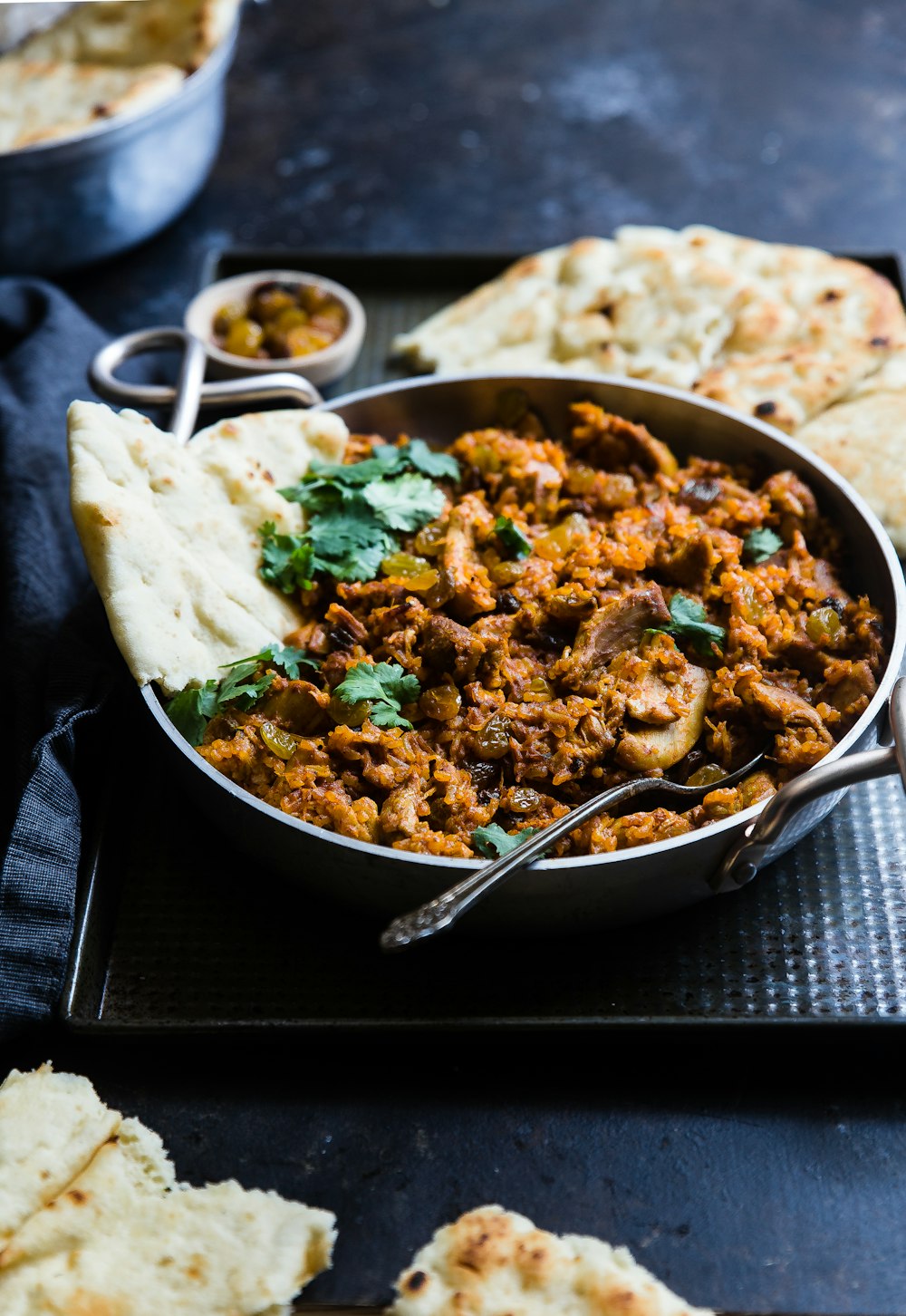
If only I could moderate my love of curries


My ideal diet would involve eating salady type food in small portions most of the time. Instead, I am obsessed with my curries. I have them every day. English people can't quite believe that I eat curries even during the height of summer. "Isn't it too hot to eat a curry?", they ask me.

Is it ever too hot to eat a curry? NO. 
SHARE:
Blogger templates by pipdig